Custom Software vs Ready-Made Software: Which is Better?
💻 Custom Software vs Ready-Made Software: Which Is Better?
Choosing the right software is an important decision for any growing business. 📈 While ready-made software offers quick setup and standard features, custom software is designed specifically around your business requirements.
Understanding the differences between these two options can help businesses choose a solution that matches their current needs, workflow, budget, and future goals. 🎯
📦 What is Ready-Made Software?
Ready-made software is a pre-built solution developed for a wide range of businesses. It usually comes with standard features and can be deployed quickly. ⚡
It can be a suitable choice for businesses that need a simple and standard solution without extensive customization.
✅ Common Advantages
-
⚡ Quick setup and deployment
-
💰 Generally lower initial cost
-
🧩 Pre-built standard features
-
🛠️ Less development time
-
🚀 Suitable for common business requirements
🛠️ What is Custom Software?
Custom software is developed specifically for a particular business, workflow, or industry. 💻
It allows businesses to choose features, integrations, workflows, user experience, and system functionality according to their specific requirements.
✨ Common Advantages
-
🎯 Designed around specific business needs
-
⚙️ Flexible workflows and functionality
-
🔗 Custom integrations
-
📈 Can support future business requirements
-
🔐 Greater control over system functionality
🔍 Key Differences
🎨 Flexibility
Custom Software:
Can be modified and developed according to your business processes and changing requirements.
Ready-Made Software:
Generally works within its existing structure and available configuration options.
📈 Scalability
Custom Software:
Can be developed with future business requirements in mind and extended as your business grows.
Ready-Made Software:
Scalability depends on the features, plans, limitations, and customization options provided by the software provider.
🔗 Integration
Custom Software:
Can be developed to integrate with existing systems, APIs, CRM platforms, payment gateways, websites, and other business tools.
Ready-Made Software:
Integration options depend on the APIs and integrations already supported by the software provider.
💰 Cost
Ready-Made Software:
May have a lower initial cost because the core software is already developed.
Custom Software:
Can require a higher initial investment because the system is developed specifically for your business. However, the overall value depends on the project scope, requirements, maintenance, and long-term usage.
🤔 Which One Should You Choose?
There is no single solution that works for every business. The right choice depends on your requirements, budget, workflow, timeline, and future plans. 📊
⚡ Ready-Made Software May Be Suitable If:
-
You need a quick solution.
-
Your business requirements are standard.
-
You don't need extensive customization.
-
You want to start with a lower initial investment.
🎯 Custom Software May Be Suitable If:
-
Your business has unique workflows.
-
You require specific features.
-
You need multiple system integrations.
-
You want greater control over the software.
-
You expect your requirements to evolve as your business grows.
📊 Custom Software vs Ready-Made Software
| Feature | 📦 Ready-Made Software | 🛠️ Custom Software |
|---|---|---|
| ⚡ Setup | Generally faster | Development required |
| 🎨 Customization | Limited to available options | Designed around requirements |
| 🔗 Integration | Depends on supported integrations | Can be developed as required |
| 💰 Initial Cost | Often lower | Usually higher |
| 📈 Scalability | Depends on provider | Can be planned for future needs |
| ⚙️ Workflow | Standardized | Business-specific |
| 🔧 Control | Provider-dependent | Greater control over development |
🏢 How Custom Software Can Help Your Business
Every business has its own way of working. Sometimes standard software may not fully match your processes.
Custom software can help bring your business workflow, automation, integrations, and reporting requirements into one solution. ⚙️
For example, a business may require:
-
🤖 Business Process Automation
-
📊 Custom Reports & Dashboards
-
🔗 API Integrations
-
💳 Payment Gateway Integration
-
👥 User & Role Management
-
📱 Mobile Application Integration
-
💬 WhatsApp Communication
-
🛒 E-commerce Integration
-
🧩 Industry-Specific Features
These requirements can be considered during the planning and development of a custom software solution.
🚀 Custom Software Development at M-Tech Systems
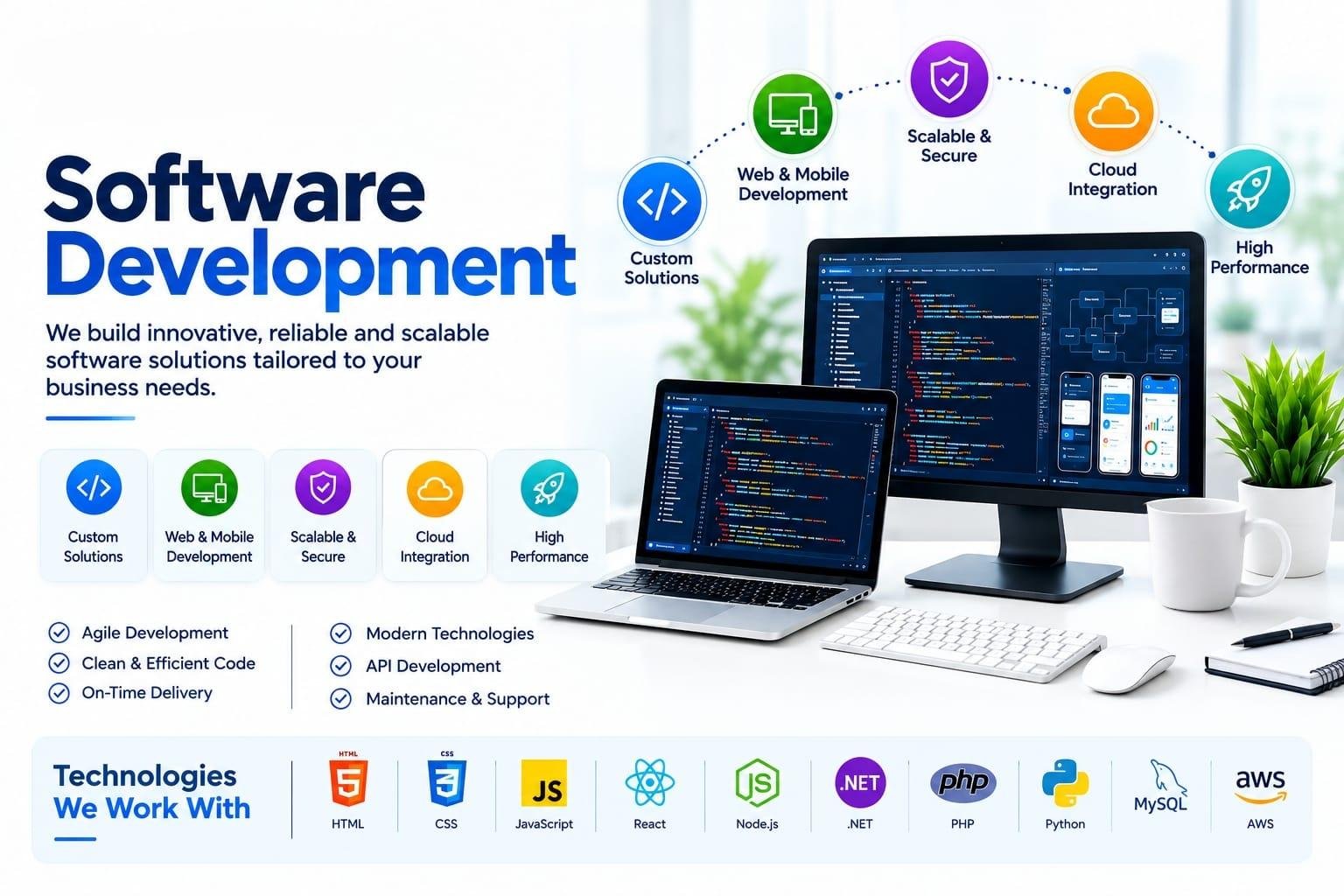
At M-Tech Systems, we develop business-focused custom software solutions designed around specific business requirements. 💻
From planning and development to integration, deployment, and support, we help businesses transform their ideas into practical digital solutions.
Our services include:
-
💻 Custom Software Development
-
🌐 Website Development
-
📱 Mobile App Development
-
🔗 API Integration
-
⚙️ Business Automation Solutions
-
🛠️ Software Maintenance & Support
💡 Make the Right Technology Choice
The best software is not always the one with the most features — it is the one that fits your business. 🎯
Before choosing between ready-made and custom software, consider your current requirements, budget, business processes, integration needs, and long-term goals. 📈